
TRAIN Hard.
live strong.
ellensburg, WA
Full-contact Kyokushin karate. Develop striking, throwing, ground skills, weapons, and practical self-defense through disciplined training that builds real strength, confidence, and capability. You don’t need experience to begin - just the willingness to show up, work hard, and discover what you’re capable of.
adults: Tue + Thu 6:30-8:00PM · Sat 10:30am–12:30pm
Youth: Tue + Thu 5:30-6:30PM
no experience necessary
BEFORE YOU COME IN
what happens on your first night
Nobody who's thinking about walking in is worried about black belt. They're worried about Tuesday and about looking foolish in front of a room full of people who know what they're doing. So here's exactly what will happen.
do i need to be in shape?
No. Come as you are. The conditioning is part of the training, not a prerequisite for it. Plenty of people here started out of breath.
what do i wear?
Anything you can move in. T-shirt and sweatpants. You don't need a dogi until you decide to stay.
Will I have to fight anyone?
Not necessarily on your first night. Not for a little while. Sparring comes when you've learned to protect yourself and we've decided you're ready - never before.
What if I'm terrible?
You will be. Everyone is. Nobody on that floor is going to be surprised or impatient about it, because they were there too, and they remember it clearly.
What actually happens?
You'll line up, warm up, and be taken through basics; a stance, a punch, a block. Someone will be assigned to help you. You'll be tired, you'll be a bit lost, and you'll know within the hour whether this is for you.
Can I just watch first?
Yes. Sit down, watch a full class, talk to whoever you like afterward. No sales pitch, no pressure, no obligation.
the beginning
you learn to stand
the work
Three stances. Straight punch, reverse punch. Two blocks. Front kick. Counting to ten in Japanese.
You will be bad at this. Not modestly bad - visibly, obviously bad, in a room where other people aren't. Your stances will be too high, your punches will have nothing behind them, and you'll go home wondering whether a grown adult should be doing this at all. Every single person on that floor started exactly here. The ones who look effortless were once you, and they remember it better than you'd think.
early
someone hits you
the work
Combinations up and down the floor. The three Taikyoku kata. Learning to fall without hurting yourself. Supervised fighting.
The kata won't make sense yet. You'll memorize the movements without understanding why, and that will bother you. Then, in your first sparring, someone hits you - not hard, but hard enough that it's real - and you'll notice something: you didn't panic. You stayed. You kept your hands up. That's not a metaphor for confidence or resilience or anything else. That's the thing itself, and you now know it about yourself in a way you didn't before.
obstacles
the wall
the work
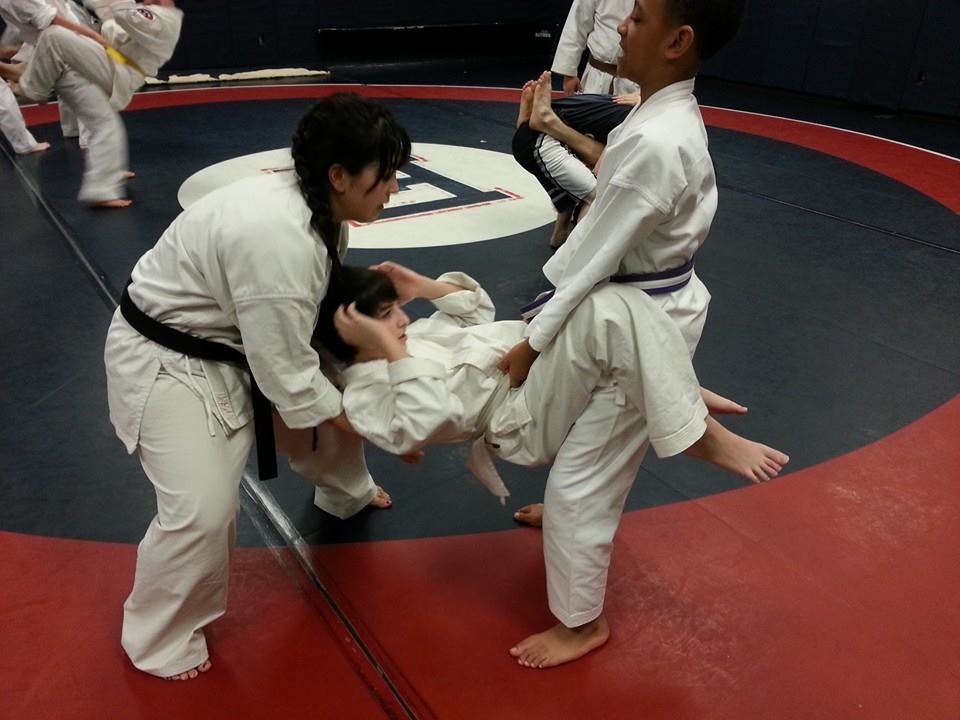
Elbows, knife-hand strikes, crescent kicks. Breakfalls and forward rolls. First throws - sweeps and hip throws. Nunchaku. Defenses against grabs, chokes, and holds.
Somewhere in here you will come up against a limitation that does not move. It might be a hip that won't open, a habit of flinching, a body that isn't twenty anymore, or something you brought with you that has nothing to do with karate. It will not yield to effort in the timeframe you want it to. This is where most people quit. Not because the training is too hard - because they realize how long it's actually going to take.
We will tell you when you're in it, and we will tell you it's normal. Then we will keep training, because your current limits will fall under the right training, but only on the far side of a lot of sweat, and never on the schedule you had in mind.
through it
you stop counting
the work
Roundhouse kicks. Ibuki breathing. The Pinan kata. Escrima and bo. Headlocks, bear hugs, full nelsons. Your first board break.
The people who got through the wall change here, and it's visible from across the room. They stop asking when the next grading is. They stop measuring themselves against the person next to them. The training becomes the point rather than the toll. This is the part that transfers. Not because we taught you a life lesson - we didn't - but because you spent a long time doing something genuinely difficult and did not stop, and that turns out to be a portable skill.
the standard evolves
it's about how well
the work
Spinning heel kicks. Sanchin. The ground game opens; takedowns, guard, mount, escapes, armbars. Multiple fights to grade.
Our syllabus spells it out plainly: it is no longer a question of whether a technique can be performed, but how well it is executed. The standard evolves, and it moves without warning. Things you were praised for are now merely expected. Most people find this harder than the wall, because there's no obvious enemy - just the slow discovery that competence is a floor, not a ceiling.
you become responsible
you start teaching
the work
Jumping kicks. Knife defense, then gun defense. Free-form jiu-jitsu against opponents bigger than you. Multiple fights against full range of opponents.
A requirement most schools don't have: before you can test for brown belt, you must be able to run a full training session yourself. Not assist - run. You will discover that you don't understand something until you have to teach it to someone who doesn't. This is where the art stops being something you do and starts being something you're responsible for.
shodan
one thousand days
the work
The accumulation of everything you have learned. All aspects, including kihon, kata, weapons, self defense, grappling, fighting. A student of the art. A thousand days of training.
Not a date. Not a schedule. A thousand days, and they are counted. Shodan means "first step." It is not the end of the curriculum and it is not a graduation; it is the point at which the dojo considers you to have earned the right to begin. Everyone who has one will tell you the same thing: it felt less like an arrival than a door.
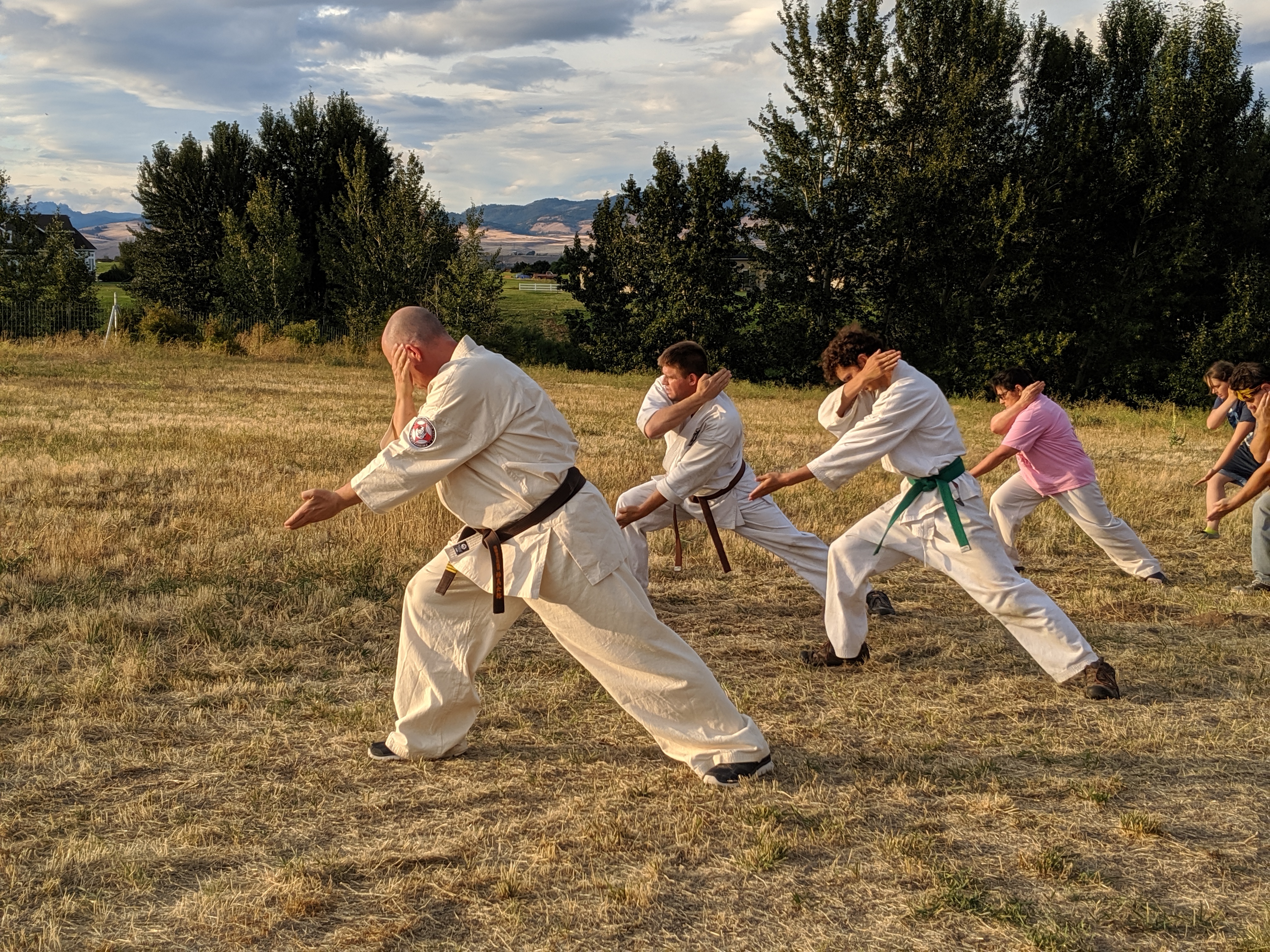
Notice there are no belts on this page. You'll earn them, and they're real - but nobody here tests on a schedule, and nobody is promoted to keep them happy. You test when you're ready. Sometimes that's fast. It's usually slow. Which is why, when someone here passes, the belt actually means something.
you become responsible
FOUR THINGS. PLAINLY STATED.
one
nobody is invincible.
Every school in this business is quietly selling invincibility. We aren't, because it doesn't exist. What exists is being harder to hurt, harder to surprise, and harder to stop than you were last year.
two
An effective striker can defeat a grappler. A good grappler can defeat a striker.
Both are true, which means the argument about which art wins has never been the real argument. Ask who trained harder.
three
The practitioner matters.
Not the tools.
This is why we never split the art into specialties. A technique is only as good as the person who owns it, so we build the person, and give them the tools to become something new.
four
the only secret is sweat.
Your current limits will fall under the right training. Not quickly, and not on the schedule you had in mind, but they will fall. There is no shortcut, and anyone trying to sell you one isn't interested in your development.
what we teach
the whole artist. not a specialty.
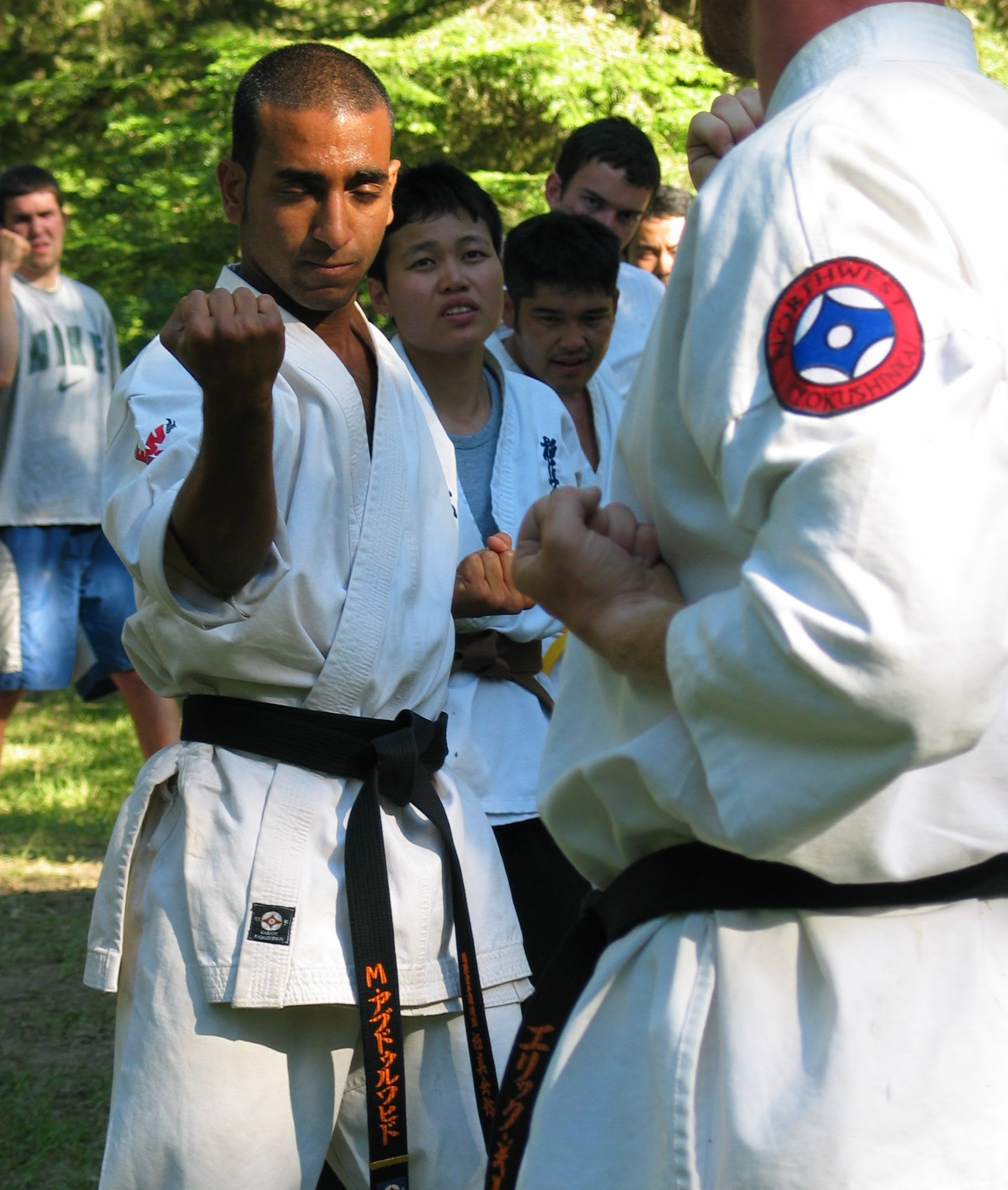
If the practitioner is what matters, then the argument about which art wins is the wrong argument. A martial artist was once expected to know the whole thing: how to strike, how to throw, how to work on the ground, how to handle a weapon, what to do when someone grabs you in a parking lot - and how to build a body that can take it.
Then the arts specialized. Striking gyms stopped grappling. Grappling gyms stopped striking. Almost everyone stopped training weapons, and most stopped making contact at all. We never split it up. Kyokushin is the core, and everything else is what a complete artist has always been expected to know.
Kyokushin · Kumite
full-contact striking
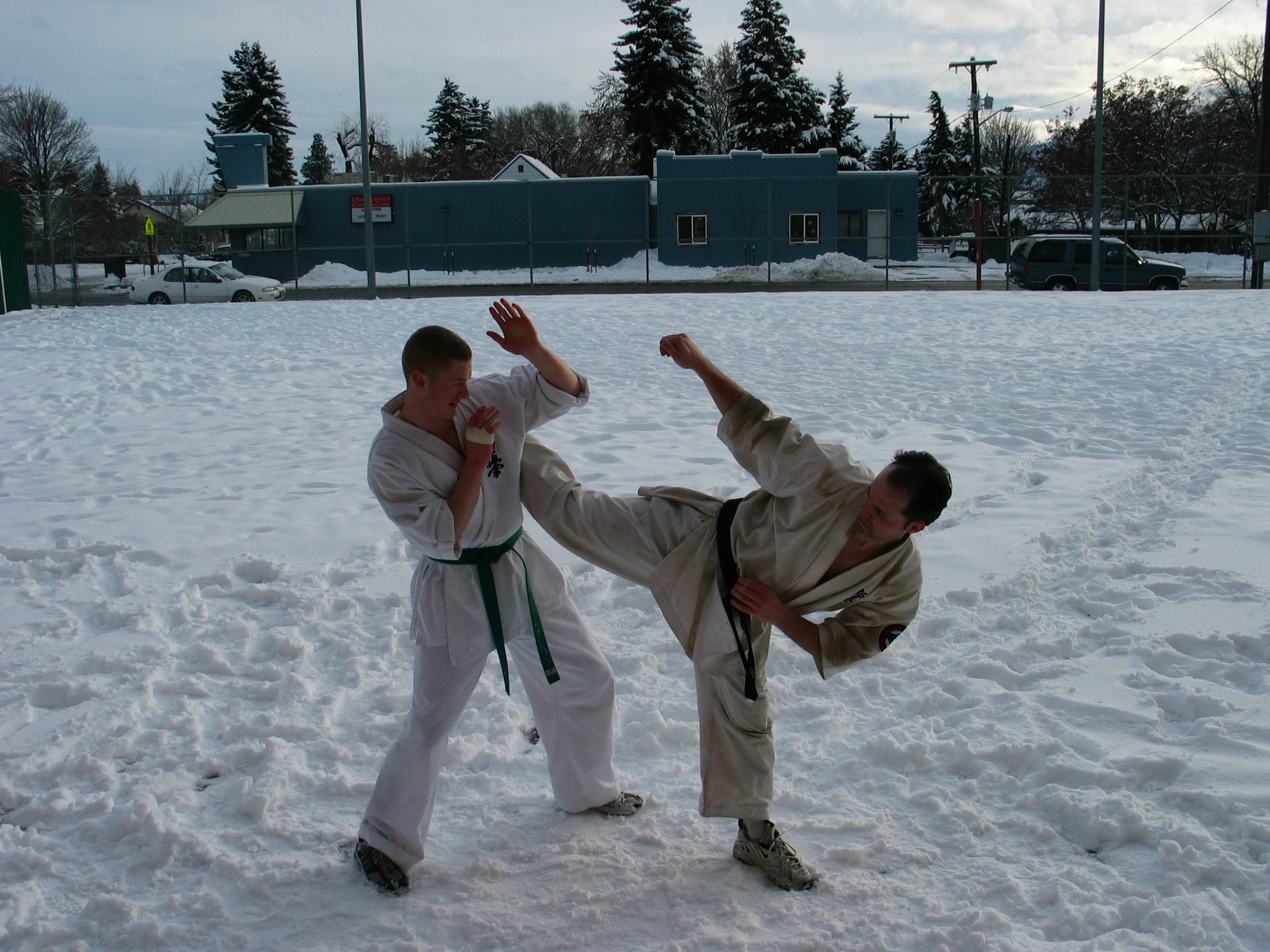
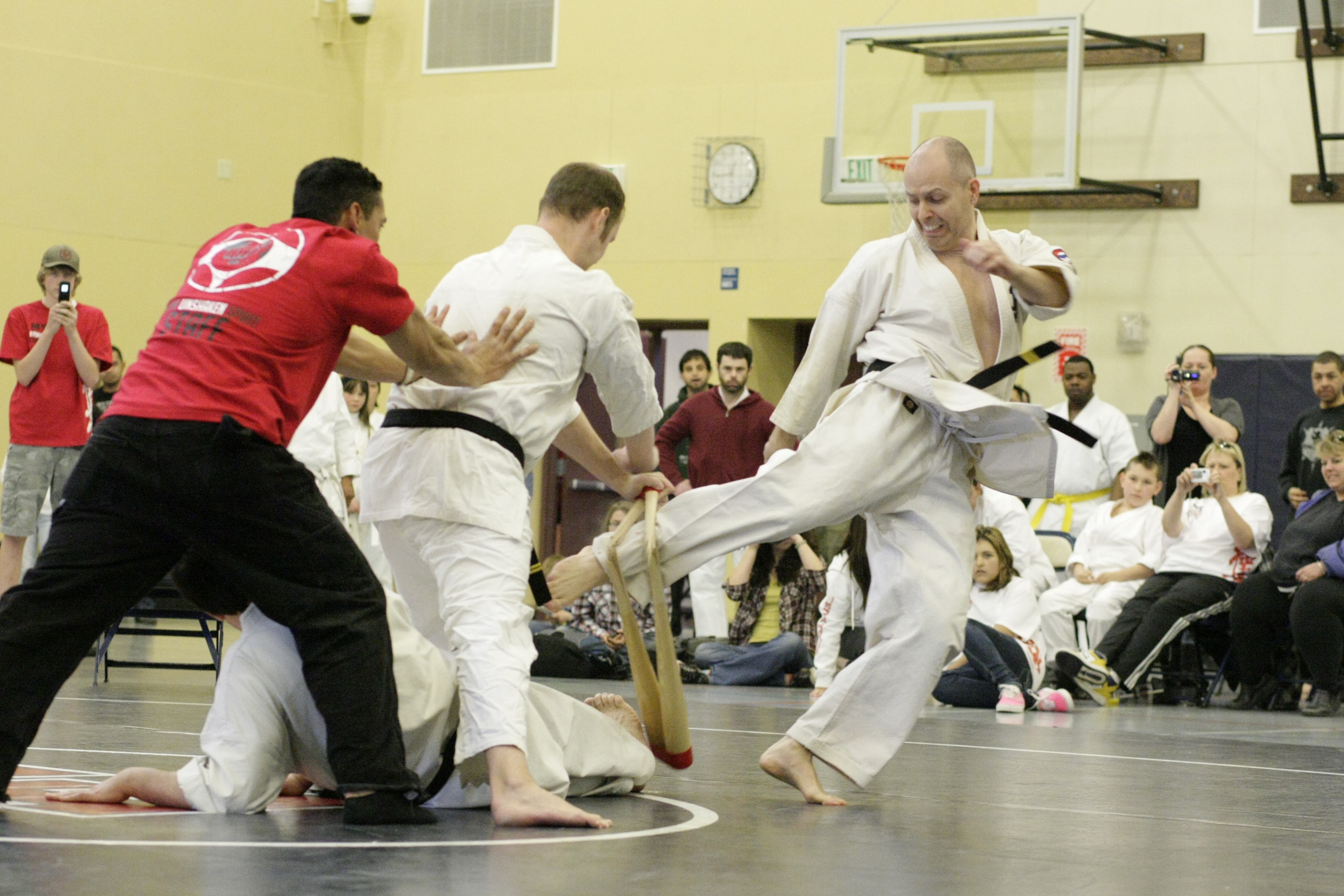
Bare-fist. No points, no pulled punches, no tapping the air and calling it a hit. Kyokushin built its reputation on contact, and it's the reason our students know what it's like to get hit and keep going.
Punches, kicks, knees, elbows. Trained to a standard that's written down and doesn't move.
NAGE · NE WAZA
Throwing & ground work
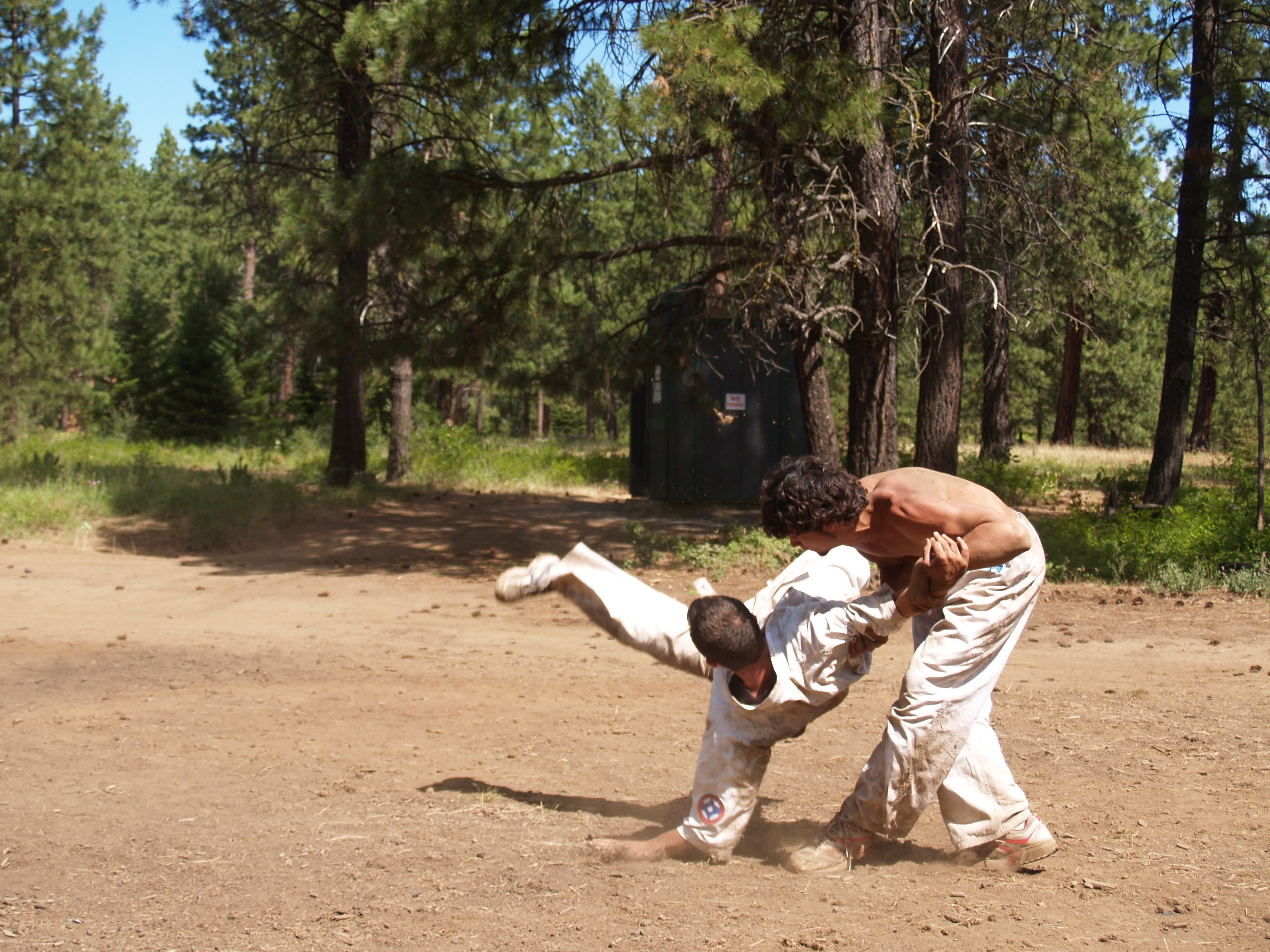
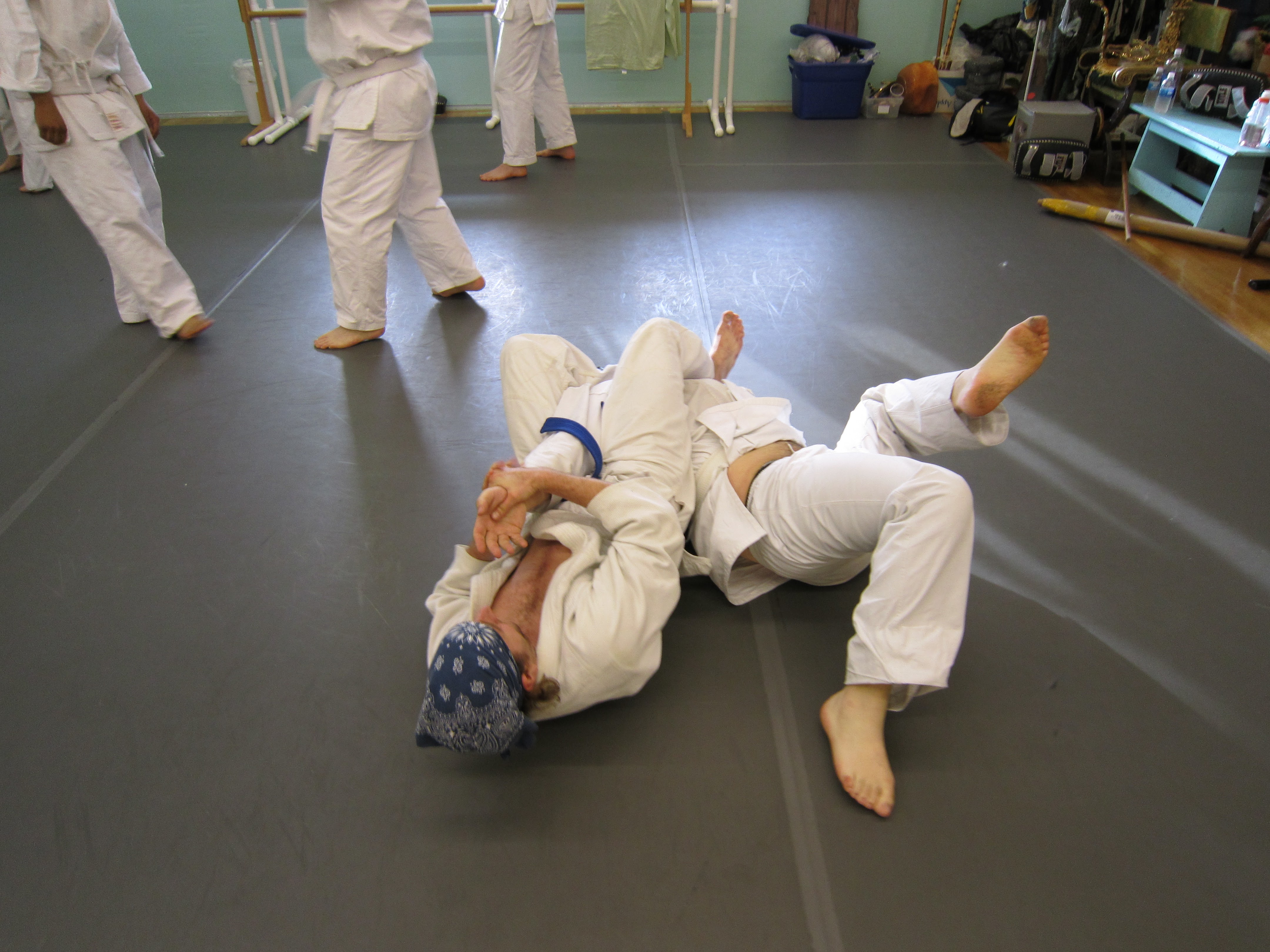
Breakfalls early. Hip throws, sweeps, and body drops as you develop. Guard, mount, escapes, armbars, chokes. A fight that leaves its feet is still a fight you know how to have.
Undō · Tameshiwari
STRENGTH & DURABILITY
The curriculum's demands climb with you - 20 push-ups early, 65 before black belt is in sight. Body hardening. Board breaking, because technique that can't transfer force isn't technique. You will get harder to hurt.
GOSHIN JUTSU
REALISTIc self defense
Grabs, chokes, headlocks, bear hugs, holds. Then knife, then gun. Trained against real resistance with real body contact - because a defense you've only practiced on someone standing still isn't a defense.
kobudō
weapons
Nunchaku, escrima, bo, tonfa, sai, and iaido. Five systems, ranked and examined like everything else. Almost nobody still teaches this. That's exactly why we do.
why a dojo in the modern age
the last place you find out whether you are kidding yourself.
Most of adult life has quietly removed the ability to be wrong in a way that costs anything. In front of a screen you cannot be found out. Every difficulty is optional. Every discomfort ends with a click. Every story you tell about yourself - how disciplined you are, how tough, how capable - can go unverified indefinitely, and usually does.
The dojo does not permit this. Someone throws a punch and either your block works or it doesn't. You either did the reps or you didn't, and everyone on that floor can see which. There is no version of yourself that survives the truth of training.
We are not offering you an escape from technology, or a simpler time, or a place to feel more authentic. We're offering you something rarer than any of that: an honest signal about your own competence, delivered immediately, by reality, in front of witnesses. Very few things in the modern world will do that for you.
you cannot spar alone.
The second thing is not a bonus. It is structural.
You cannot learn to fight by yourself. You cannot be thrown by yourself. The art is physically impossible without other people choosing to show up, put hands on you, and trust you not to hurt them - and you have to earn that trust every time, from people who will know immediately if you haven't.
That's not community as a marketing word. It's a requirement of the training. Several days a week you will be in a room where your presence is necessary to other people's progress and theirs is necessary to yours. There are not many rooms like that left.
what it's for
Six things you'll walk out with that have nothing to do with fighting.
These are not scarce by accident. They are the things that only develop where there are real consequences and real people; which is to say, in fewer and fewer places. Every dojo claims some version of this list, so we've noted where each one is actually written into our curriculum and examined. A promise you can be tested on is a different kind of promise.
fudoshin
A mind that doesn't panic
The immovable mind. Calm, unwavering determination - what you draw on when things go wrong and you still have to function. The most valuable thing we teach, and the hardest to acquire.
Where it's graded
Yellow belt - alongside Zanshin (alert awareness) and Mushin (a mind free of fear and ego).
Undō · Tameshiwari
A body that's harder to break
Not fitness. Durability. Conditioning that climbs with your rank, body hardening, and the ability to absorb a hit and keep moving. You will be measurably harder to hurt than the person who walked in.
Where it's graded
Every rank. Twenty push-ups at the start, sixty-five before black belt. Training that produces a strong body and mind.
Reisetsu
Judgment under aggression
Not how to win a fight - how to think clearly while someone is trying to hurt you, and how to decide what is actually necessary. Most people have never tested this about themselves. You will.
Where it's graded
Green belt and above: handle conflict and aggression with a level mindset and calm decision-making.
Hansei
Honest self-assessment
Three questions, every week, for as long as you train: What went well? What didn’t? What am I going to do about it? One of the most transferable habits in our curriculum, and one most adults never build.
Where it's graded
Every rank, from white belt on. The journal is a requirement, not a suggestion. Self evaluation is essential.
Service
The capacity to serve
The senior ranks are not about you alone. You will be expected to develop others, to teach, to lead by example, and - in the syllabus’s own words - to build community capacity for kindness. This is what the belt is ultimately for.
Where it's graded
Yellow onward: service mindset and leadership potential. Brown: instruct a full training session.
Mushin
Acting without hesitation
At the far end of the curriculum is technique applied in rapidly changing conditions without conscious thought. Years away, but the goal is simple: eliminate the gap between deciding and doing.
Where it's graded
Brown belt: apply techniques in rapidly changing conditions without obvious conscious thought.
None of these are things we say about ourselves. They are written into the syllabus, and they are examined. You will be asked to demonstrate a level mindset under aggression the same way you are asked to demonstrate a roundhouse kick, and you do not advance until you can.
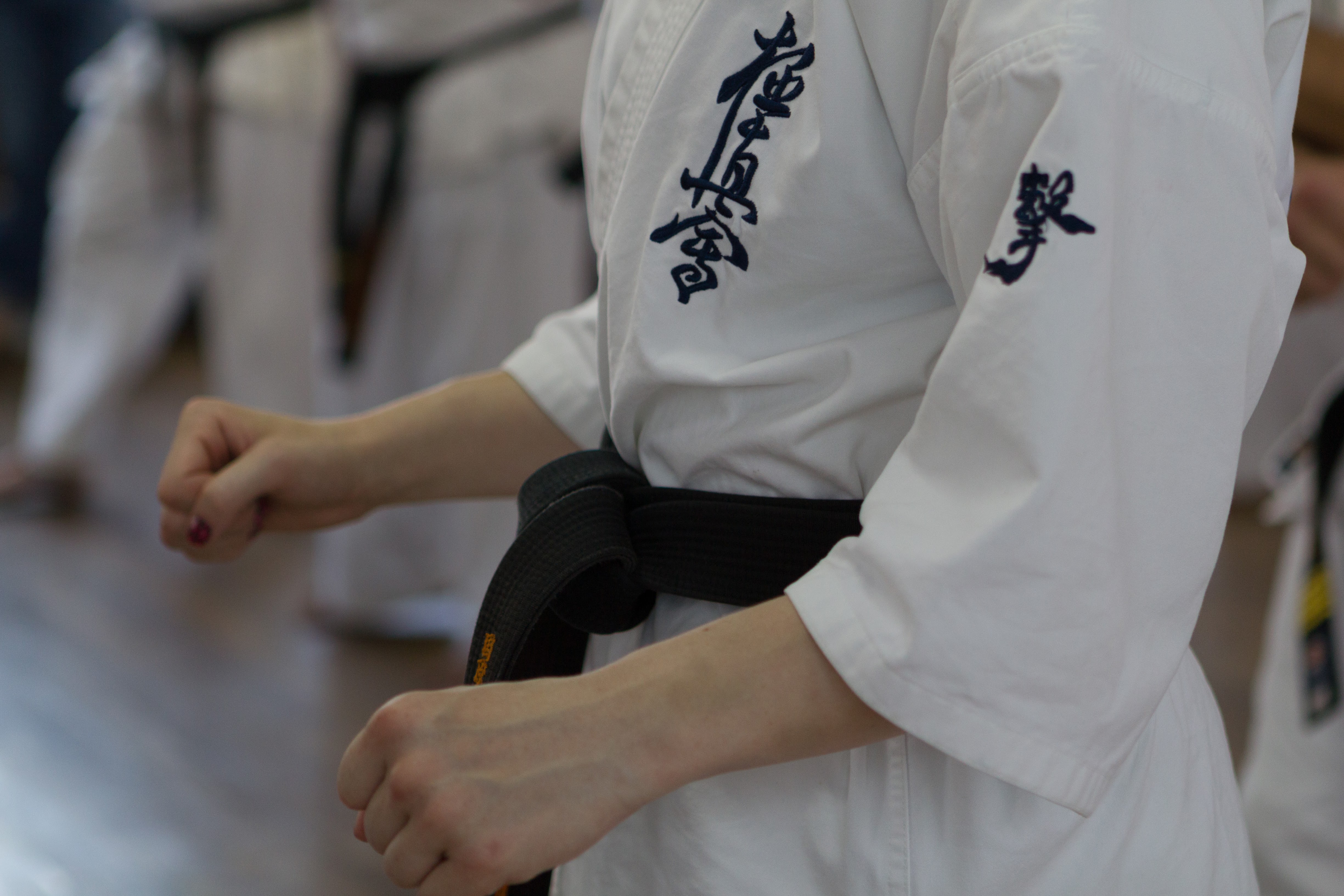
master instructor - Shihan Ian Quitadamo
forty years.
one standard.
The curriculum here is written down: every rank, every technique, every requirement. You will always know where you stand and what comes next. That's rarer than it should be, and it's the reason our students improve rather than merely attend.
rank
6th dan, world so-kyokushin
lineage
Trained at the Oishi dojo, Japan
teaching
Twenty-five years leading this dojo
university
professor, Scientist, Health Professional
women who train here
confident without pretending.
We don't run a women's self-defense program. That's the reason it works.
What's usually sold to women under that heading is a weekend, a set of wrist techniques, and a partner who has agreed in advance to let go. It produces the feeling of safety without producing safety, and on some level everyone in the room knows it.
The women here just train. Same curriculum, same standard, same sparring, same floor as everyone else. They learn to strike with power that lands, to throw someone larger than they are, to work from underneath, to take a hit and keep going. It takes longer than a weekend and it is not a metaphor: they become genuinely dangerous.
Nobody here goes easy on you. Nobody is surprised when you're good.
They say they feel strong.
Durable. Capable.
Confident without pretending.
Like they occupy a different space in the world.
classes
where to start
start here
adult karate
Tue + Thu 6:30–8:00pm · Sat 10:30am–12:30pm
The full curriculum: striking, grappling, weapons, self-defense, and full-contact sparring. Beginners train alongside experienced students at their own level from day one. You won’t be thrown in the deep end, and you won’t be coddled.
No experience required. If you've trained before, in any art, you'll find plenty here.
Ages 6 and up
youth karate
Tue + Thu 5:30–6:30pm
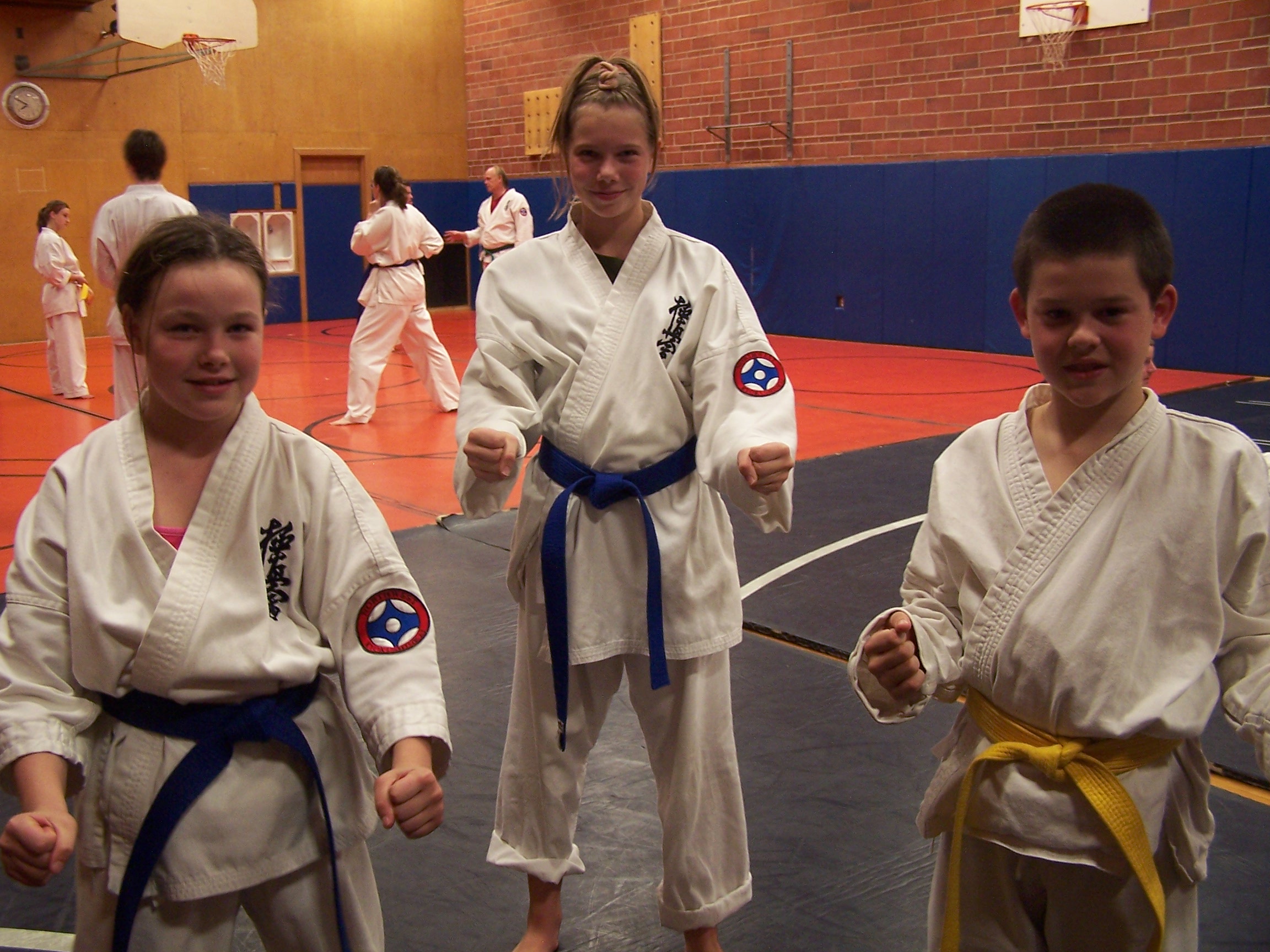
Foundational Kyokushin for kids and teens. Real technique, purposeful conditioning, and the habits that develop alongside them: attention, effort, discipline, resilience, confidence, and learning how to lose, adapt, and keep moving forward.
Family rates available. Parents: the adult class starts when theirs ends.
Ages 16+ · Occasional
self-defense
See upcoming dates
A few hours on awareness, assertive response, and the techniques that matter most. We run these periodically, and we'll tell you the truth about them: a seminar is an introduction. If you want to actually be able to fight back, you train.
All fitness levels. No experience needed.
location
2060 Vantage Hwy Suite 11 · Ellensburg WA · USA
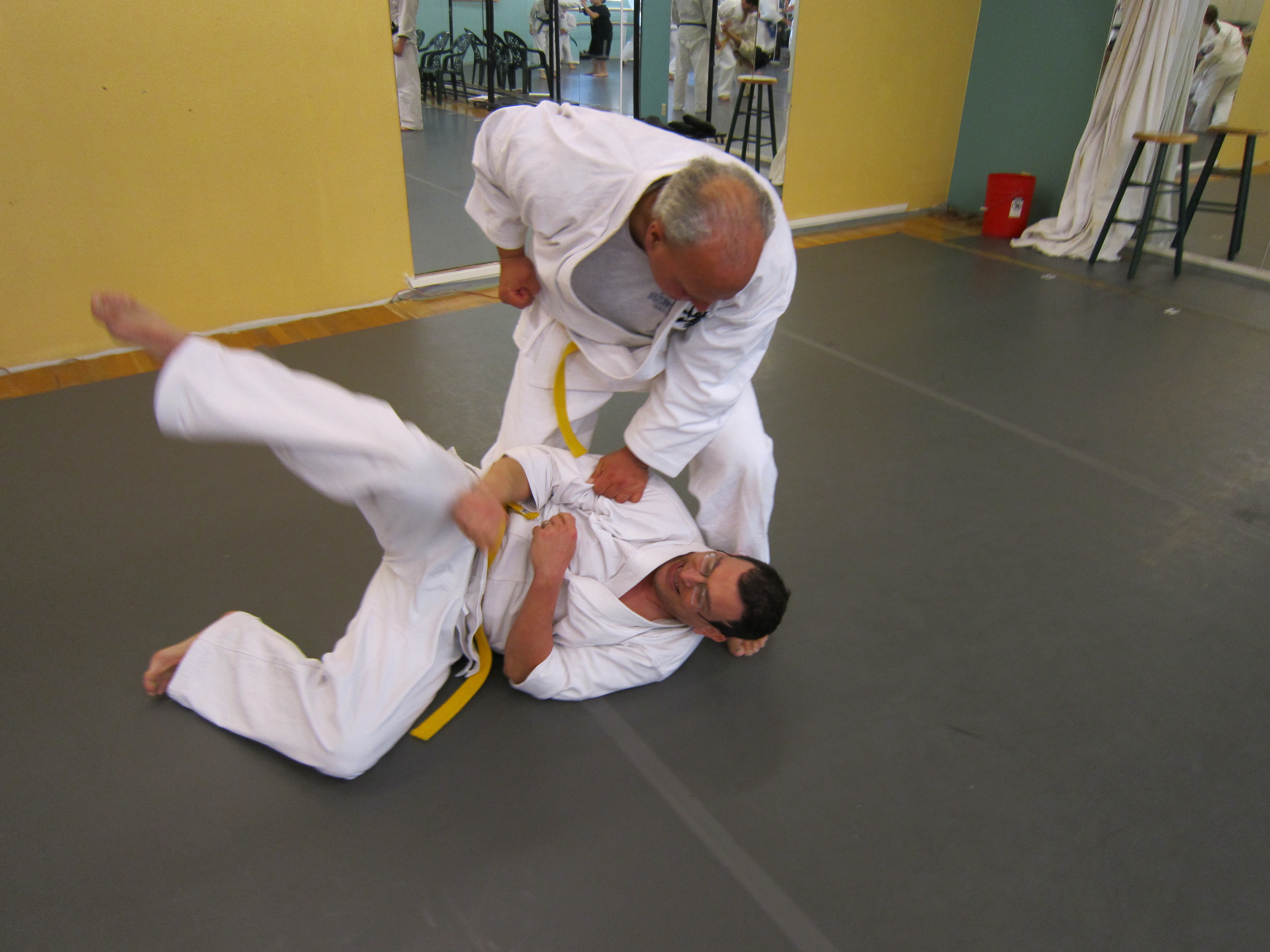
Kids and teens · Ages 6+
Your kid will learn to lose well.
Every dojo tells you it builds discipline, respect, and confidence. You've heard it, you can't check it, and you've probably stopped believing it. So here's what's actually written into our junior curriculum - the things your child will be graded on, that most schools don't ask for at all.
01
they will fight
Several supervised fights to earn their first belt. Many to progress over time. Controlled, matched, and watched closely - but real. Your child will learn what it's like to be under pressure and not come apart. Very few things a kid can do will teach that.
02
they will reflect
Every week, at every rank. What went well. What didn't. What I need to do about it. It's a requirement, it's graded, and it's the most portable skill in the whole curriculum - it works on a math test and a bad practice and a friendship that went sideways.
03
they will work hard
Nobody is promoted on a schedule or to keep them feeling good. Our syllabus says it plainly: time alone does not earn promotion. Which means when your child earns a belt here, they know it wasn't given to them - and they can feel the difference.
the training journal - every rank, on schedule
1
what has gone well
2
what has not gone well
3
what you need to do to improve
A binder, the syllabus in sheet protectors, a dry-erase marker to check off what they can do on their own. Three questions, asked routinely, for as long as they train. This is the part parents tell us about, not the kicks.
And the honest part: this is a full-contact school. The training is demanding, the standard doesn't bend, and we will tell your child the truth about their performance. If you're looking for a place where every kid gets a trophy, we're the wrong dojo, and we'd rather say so now.
visit
come watch.
then come train.
Sit in on any class before you commit. No pressure and no sales pitch - watch a session, talk to the students, and decide for yourself.
TRAIN HARD.
LIVE STRONG.


Copyright © 2026 Ultimate Truth LLC