i[email protected] | +1 509 607 9496

MIND, BODY, AND SPIRIT
BEHAVIOR EXPECTATIONS
Central Kyokushin Karate members are part of a distinct martial arts family that works to improve their mind, body, and spirit through persistent effort, self-discipline, and dedication to learning and growth.
With a strong focus on character development and service to others, student behavior – both in and out of the dojo – is governed by shared values and expectations specified in the 11 Mottos of Mas Oyama and the Central Kyokushin Karate Code of Conduct and Code of Life.
All students are expected to behave in ways that promote effective, safe training, build respect for self and others, and encourage a healthy mindset and lifestyle. Successful growth of martial skill and ethical character is achieved by adherence to the 11 Mottos and the Central Kyokushin Karate Codes.
MIND, BODY, AND SPIRIT
BEHAVIOR EXPECTATIONS
Central Kyokushin Karate members are part of a distinct martial arts family that works to improve their mind, body, and spirit through persistent effort, self-discipline, and dedication to learning and growth.
With a strong focus on character development and service to others, student behavior – both in and out of the dojo – is governed by shared values and expectations specified in the 11 Mottos of Mas Oyama and the Central Kyokushin Karate Code of Conduct and Code of Life.
All students are expected to behave in ways that promote effective, safe training, build respect for self and others, and encourage a healthy mindset and lifestyle. Successful growth of martial skill and ethical character is achieved by adherence to the 11 Mottos and the Central Kyokushin Karate Codes.
CORE VALUES
Principles that shape productive Kyokushin training and a healthy martial arts lifestyle.
11 MOTTOS SOSAI OYAMA
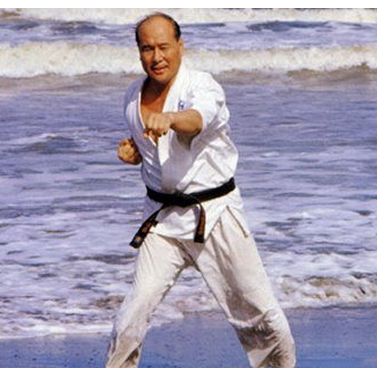
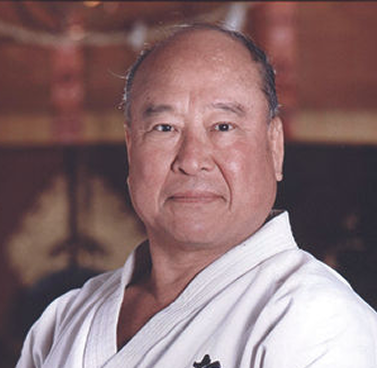
Mas Oyama—a legendary figure of martial skill, mental fortitude, and unwavering character—captured the essence of Kyokushin karate in his 11 guiding principles, the Zayu no Mei Jūichi Kajō. These powerful mottos form the heart of Kyokushin training, teaching not just how to fight, but why martial arts matter—and how they forge a lifetime of discipline, purpose, and values.

The Martial Way begins and ends with courtesy. Therefore be properly and genuinely courteous at all times.

Following the Martial Way is like scaling a cliff — continue upwards without rest. It demands absolute and unflattering devotion to the task at hand.

Strive to seize the initiative in all things, always guarding against actions stemming from selfish animosity or thoughtlessness.

Even for Martial Artists, the place of money cannot be ignored. Yet one should be careful never to become attached to it.

The Martial Way is centered on posture. Strive to maintain correct posture at all times.

The Martial Way begins with one thousand days and is mastered after ten thousand days of training.

In Martial Arts, introspection begets wisdom. Always see contemplation on your actions as an opportunity to improve.

The nature and purpose of the Martial Way is universal. All selfish desires should be roasted in the tempering fires of hard training.

Martial Arts begin with a point and end in a circle. Straight lines stem from this principle.

The true essence of the Martial Way can only be realized through experience. Knowing this, learn never to fear its demand.

Always remember: in the Martial Arts, the rewards of a confident and grateful heart are truly abundant.



Dojo Learning
Behaviors that ensure effective, safe training, development of martial skill, and growth over time.
CODE OF CONDUCT
ACT WITH INTEGRITY
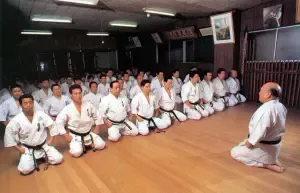
Student behavior within the dojo is dictated by the Central Kyokushin Karate Code of Conduct. All students are expected to behave in ways that promote effective, safe training, build respect for self and others, and encourage a healthy mindset and lifestyle.
Be respectful
Bow as you enter and leave the dojo.
Do not wear shoes in the training area.
Pay close attention when instructors are speaking.
Ask for instructor permission before entering or leaving the training area.
Bow before and after working with someone.
Do not argue or talk excessively during training.
Be prepared to train
Arrive on time.
Maintain a clean and organized training space.
Remove all jewelry and piercings before class.
Line up properly by rank and experience.
Regulate your behavior
Immediately obey all instructor commands.
Stay alert and focused during instruction and training.
Do not teach others karate without instructor permission.
Never provoke violence or be provoked outside the dojo.
Always be aware of your surroundings and act accordingly.
Defend yourself at all times.
Consider needs of others
Always treat others with dignity and respect their diverse viewpoints, backgrounds, and lived experiences.
Never use rank or status to unduly influence or manipulate others.
Ask permission to work with or touch someone prior to doing so.
Do not solicit, suggest, advance, use innuendo, inappropriately touch, or in any way sexually harass others.
Do not train if experiencing transmissible illness.
Inform partners of existing injuries prior to training with them.
Advise partners to properly regulate training intensity.
Present yourself in a clean, professional manner
Consistently clean and maintain your uniform and equipment.
Keep fingernails and toenails properly groomed.
Never train under the influence of alcohol or illicit drugs.
Communicate effectively
Notify instructors if you will miss class.
Politely ask for clarification and seek insight as needed.
Avoid all forms of verbal or behavioral rudeness or disrespect.
Do not use profanity or vulgar language.
Inform instructors of any grievous violations of conduct codes.


Code of Life
Aspirations to build a clear mind, a strong body, a durable spirit, and perfect one’s character.

COURAGE. PERSEVERENCE. COMPASSION.
LIVE WITH HONOR
In today’s world, more people than ever feel restless, disconnected, and uncertain of their self-worth. We live in a hyper-connected society—constantly plugged in, yet profoundly isolated. Both children and adults struggle to find meaningful values, guiding principles, and a clear sense of direction in life. But at the core of it all, one truth remains: who you become is up to you.
The journey to self-awareness is challenging. It demands time, energy, and courage. So why take the hard road? Because when you truly know yourself, anything becomes possible.
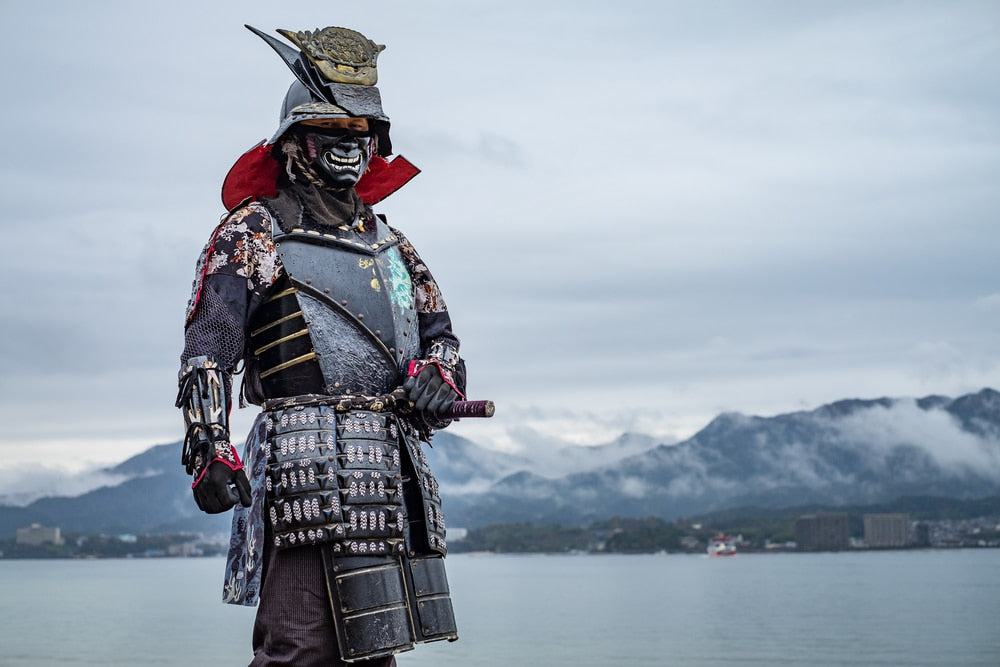
This quest for meaning isn’t new. It's an ancient pursuit that has taken many forms throughout history. One of the most powerful frameworks is Bushido—the Way of the Warrior. Much like the knight’s code of chivalry, Bushido is a time-honored ethical path rooted in honor, integrity, courage, skill, and loyalty. Practiced by the samurai, Bushido was not a religion—it was a code of life, a compass for becoming someone worthy of respect.
In our modern era, the true meaning of Bushido is often diluted—overshadowed by the pursuit of medals, belts, and short-term glory in sport karate. Kyokushin is different.
At the heart of Kyokushin lies a deeper purpose: to relentlessly train the mind, forge the body, and fortify the spirit—so that we may strive to perfect our character. This is the modern path of the warrior. And it is as vital today as it was centuries ago.
There is nothing outside of yourself that can ever enable you to get better, stronger, richer, quicker, or smarter. Everything is within. Seek nothing outside yourself.
- Miyamoto Mushashi


If you want to build a better life, hold yourself to higher standards
The world offers countless versions of “success,” but the truth has never changed. For thousands of years, the path to a meaningful life has followed the same timeless formula:
Live with honor and purpose
The 7 Virtues of Bushido
Care for your body with intention
The 5 Principles of Good Health
Cultivate a resilient, focused mind
The 3 States of Mind
Excellence isn’t accidental—it’s earned through daily choices that shape who you become.
The 7 Virtues of Bushido


GI
Justice
Consider all points of view before committing to and making a decision. Be true to yourself.

REI
Respect
Behaviors that ensure effective, safe training, development of martial skill, and growth over time.


YU
Courage
Use intelligence and strength to face danger, take balanced risks, and live a full life.

MEIYO
Honor
Every decision you make reflects your character. Judge only yourself.


JIN
Compassion
Building true strength takes dedication and effort. Always use your power for good. Be kind. Strive to improve the lives of others.


MAKOTO
Integrity
Your word is your bond. If you mean it, say it. If you say it, do it. Make no excuses.


chu
Loyalty
Be true to your principles and protect all who are in your care. Accept consequences of your words and actions.

5 Principles of Good Health
Rational Nutrition
Choose food consistent with long-term health and vitality. Try to consume a diet with plenty of fresh fruits and vegetables of every color, lean protein, complex carbohydrates, and whole grains.
Sensible Exercise
Everything, including exercise, has a time and place. Train hard but allow yourself time to heal. Good, balanced nutrition is key to recovery from hard training.
Efficient Rest
Restful sleep is one of the most important things you can do to maintain good health. Your body knows what it is doing; be sure to give it the time to do it well.
Proper Hygiene
Maintaining proper hygiene shows respect for self and for others. Improper hygiene leads to illness and disease over time.
Positive Attitude
Your body will do what your mind says it should do. If you believe you can do something, your body will find a way. Scientific studies show people with a positive attitude and outlook live longer and are healthier overall.
3 States of Mind
Zanshin
残心
Alert Awareness
Translated literally, zanshin mean ‘remaining mind’. It also refers to posture before, during, and after taking an action. Essentially, zanshin is a state of mind where a person is totally aware, with relaxed alertness of one’s surroundings and potential threats that allows seamless reaction to changing conditions.
Mushin
無心
No Mind
Translated as 'mind without mind' or 'no-mindedness', mushin is a state of mind where all fear, anxiety, ego, and other emotions that cloud your judgment or restrict your actions are absent. Mushin is a state of unfiltered being, a total immersion in the present moment that allows one to act without thought or emotion, a state of complete openness where all possibilities exist. Mushin is difficult to describe, because the more one attempts to do so, the further away from mushin one becomes.
Fudoshin
不動心
Emotional Balance
Referred to as ‘immovable mind’, fudoshin is a mental state where one achieves peaceful, complete determination and unwavering will. Used as an antidote to anger, doubt, fear or hesitation, fudoshin is the mental fuel many martial artists and athletes use to overcome every obstacle with courage and an implacable will to succeed. Achieving fudoshin can feel like you are invincible and cannot lose.
LANGUAGE EXPECTATIONS
Kyokushin karate is a Japanese martial art. Dojo terminology, body anatomy, and commands are expressed in Japanese and English, particularly for newer students. Over time, it is expected that each student learn basic Japanese terms and be able to understand and speak this way in the dojo.
Since learning any new language is challenging, we have prepared a document that contains standard phrases, mind-body terms, counting, position, basic techniques, stances, punches, strikes, blocks, kicks, and body part weapons. Students are expected to read, understand, and be able to use these terms over time.




Copyright © 2026 ULTIMATE TRUTH LLC